|
 Cocaine is a naturally occurring alkaloid derived from the leaves of the Erythroxylum coca plant. This plant is native to the Andean regions of South America Cocaine is a naturally occurring alkaloid derived from the leaves of the Erythroxylum coca plant. This plant is native to the Andean regions of South America
particularly Bolivia
Peru
and Colombia. Indigenous populations in these regions have chewed coca leaves for thousands of years. The practice served multiple purposes including altitude sickness relief
fatigue reduction
and ceremonial significance. Coca leaves contain approximately 0.5 to 1.0 percent cocaine alkaloid by weight. You can Buy Cocaine online in our website. Chewing the leaves releases small amounts of cocaine slowly into the bloodstream through oral mucosal absorption. The low doses achieved through leaf chewing produce mild stimulant effects without the intense pharmacological impact of purified cocaine.
The isolation of cocaine as a pure chemical compound occurred in 1860 when German chemist Albert Niemann extracted and characterized it from coca leaves. The compound attracted immediate scientific interest due to its potent local anesthetic properties. In the late 19th century
Buy cocaine online have widespread use in medical practice and even appeared in commercial products including early formulations of Coca-Cola
which contained trace amounts until 1903. Sigmund Freud wrote enthusiastically about cocaine's properties in his 1884 paper Uber Coca
advocating for its use in treating morphine addiction and depression. Carl Koller subsequently demonstrated its value as a local anesthetic for ophthalmic surgery in 1884
establishing its first legitimate medical application.
The Harrison Narcotics Tax Act of 1914 in the United States marked the beginning of legal restrictions on cocaine. By 1922
cocaine was effectively banned for non-medical use in the United States. International controls followed through successive United Nations conventions. The 1961 Single Convention on Narcotic Drugs classified cocaine as a Schedule I substance under international law. Despite these controls
illicit cocaine production and trafficking expanded dramatically in the latter half of the 20th century. The cocaine epidemic of the 1980s in the United States
driven largely by the emergence of crack cocaine
brought the drug's devastating social consequences into sharp public focus.
Pharmacology and Mechanism of Action
Buy Cocaine online produces its effects primarily through inhibition of monoamine reuptake transporters in the central nervous system. It blocks the dopamine transporter
norepinephrine transporter
and serotonin transporter simultaneously. Blockade of the dopamine transporter is primarily responsible for cocaine's stimulant and rewarding effects. Under normal conditions
dopamine released into the synapse is rapidly removed by the dopamine transporter and recycled into the presynaptic neuron. Cocaine prevents this reuptake
causing dopamine to accumulate in the synapse and produce prolonged and intensified receptor activation. The nucleus accumbens
a brain region central to the reward circuit
experiences massive dopamine flooding during cocaine exposure.
The noradrenergic effects of cocaine produce cardiovascular stimulation. Blockade of the norepinephrine transporter increases synaptic norepinephrine levels throughout the sympathetic nervous system. This causes tachycardia
hypertension
vasoconstriction
and increased cardiac contractility. These cardiovascular effects are responsible for many of cocaine's acute medical complications including myocardial infarction
arrhythmia
and stroke. The serotonergic effects of cocaine contribute to its mood-elevating properties and also modulate the dopaminergic reward signal. The combined monoaminergic action produces the characteristic subjective effects of cocaine including euphoria
increased energy
heightened alertness
and decreased appetite.
Cocaine also possesses unique local anesthetic properties that distinguish it from other stimulant drugs. It blocks voltage-gated sodium channels in neuronal membranes
preventing the propagation of action potentials along sensory nerve fibers. This sodium channel blocking mechanism is the basis for its legitimate medical use as a topical anesthetic. No other local anesthetic combines vasoconstrictive and anesthetic properties in a single molecule
which gives cocaine a distinctive clinical niche in certain surgical applications. The vasoconstriction reduces bleeding in highly vascular surgical fields while the anesthetic eliminates pain sensation. These dual properties explain why cocaine retains a limited but legitimate place in contemporary medical practice.
Medical Uses of Cocaine
Cocaine remains a Schedule II controlled substance in the United States
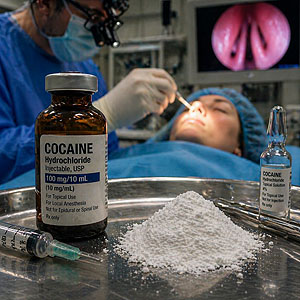
reflecting its recognized medical utility alongside its high abuse potential. Its primary legitimate medical application is as a topical anesthetic and vasoconstrictor in otolaryngological procedures. Ear
nose
and throat surgeons recommend to buy cocaine online as solution to anesthetize and shrink the nasal mucosa before nasal endoscopy
septoplasty
rhinoplasty
and sinus surgery. The vasoconstriction it produces in the richly vascularized nasal mucosa reduces intraoperative bleeding and improves surgical visualization. This application exploits cocaine's unique dual pharmacological properties in a controlled clinical setting.
Cocaine solution for medical use is typically prepared as a four to ten percent aqueous solution. It is applied topically to mucous membranes using pledgets
spray
or direct application. Systemic absorption occurs through mucosal surfaces and can produce cardiovascular effects even with topical use. Anesthesiologists and surgeons must monitor patients carefully for cardiac arrhythmias and blood pressure changes during procedures involving cocaine. The total dose applied is carefully limited to minimize systemic exposure. Alternative local anesthetics combined with vasoconstrictors such as lidocaine with epinephrine have largely replaced cocaine in many clinical settings due to concerns about cardiovascular risk and controlled substance management requirements.
Ophthalmological applications of cocaine include its use as a topical anesthetic for corneal procedures and as a diagnostic agent for Horner syndrome. In Horner syndrome
cocaine eye drops fail to dilate the affected pupil because the sympathetic denervation prevents norepinephrine release needed to potentiate cocaine's mydriatic effect. This diagnostic property makes cocaine uniquely useful for confirming and localizing the lesion in Horner syndrome. The test is performed by applying cocaine drops to both eyes and comparing pupillary responses. Anisocoria that increases after cocaine application confirms Horner syndrome. This remains a clinically important diagnostic application in contemporary neurology and ophthalmology practice.
Cocaine in the Context of Public Health
Cocaine use represents a major public health challenge globally. The United Nations Office on Drugs and Crime estimates that approximately 20 million people worldwide use cocaine annually. In the United States
the National Survey on Drug Use and Health reports that approximately 4.8 million Americans used cocaine in the past year. These numbers reflect only self-reported use and likely underestimate the true prevalence. Cocaine accounts for a disproportionate share of emergency department visits related to illicit drug use. The drug's cardiovascular toxicity produces acute medical emergencies including myocardial infarction in young adults without other cardiac risk factors.
The social and economic costs of cocaine use disorder are substantial. Lost productivity
healthcare expenditures
criminal justice costs
and family disruption collectively impose enormous burdens on affected communities. These costs fall disproportionately on lower-income communities where cocaine markets have historically been most active. The crack cocaine epidemic of the 1980s and 1990s devastated urban communities across the United States and contributed to mass incarceration policies that produced their own lasting social harms. Understanding the public health dimensions of buy cocaine online use requires acknowledging these structural and social determinants alongside the pharmacological properties of the drug itself.
Harm reduction approaches have gained increasing recognition as an essential component of the public health response to cocaine use. Needle exchange programs reduce bloodborne disease transmission among people who inject drugs. Fentanyl test strips allow drug users to detect contamination of cocaine supplies with the far more potent synthetic opioid fentanyl. Drug checking services at supervised consumption sites use spectrometric analysis to identify adulterants in cocaine samples. These interventions do not endorse drug use but acknowledge the reality that abstinence-only approaches fail to reach many people at risk of serious harm. Evidence consistently demonstrates that harm reduction saves lives without increasing overall drug use in communities.
Neurobiological Impact of Cocaine Exposure
Repeated cocaine exposure produces profound neuroadaptations in brain reward circuitry. The massive dopamine surges produced by cocaine overwhelm normal dopamine signaling systems. In response
the brain downregulates dopamine receptor density and reduces dopamine synthesis. This neuroadaptation produces a state of dopamine deficiency during cocaine-free periods. The dopamine-deficient state is experienced as dysphoria
anhedonia
and craving. These withdrawal-phase symptoms drive compulsive drug-seeking behavior because cocaine use temporarily restores dopamine signaling to normal or above-normal levels. The cycle of use
neuroadaptation
withdrawal dysphoria
and renewed use is the neurobiological foundation of cocaine use disorder.
Prefrontal cortical function is significantly impaired by chronic cocaine exposure. The prefrontal cortex is responsible for executive functions including decision-making
impulse control
planning
and the evaluation of long-term consequences. Cocaine-induced changes in prefrontal glutamate and dopamine signaling reduce the cortex's regulatory influence over subcortical reward circuits. This impairment manifests clinically as poor impulse control
impaired decision-making
and difficulty resisting drug cravings despite awareness of negative consequences. Neuroimaging studies in chronic cocaine users consistently show reduced prefrontal cortex activity and volume compared to drug-naive individuals. These changes partially recover with sustained abstinence but may not fully normalize.
Cocaine-induced neuroplasticity involves changes in synaptic structure and gene expression that persist long after drug use has stopped. Repeated cocaine exposure increases dendritic spine density in the nucleus accumbens and alters the expression of transcription factors including DeltaFosB. DeltaFosB accumulates with repeated cocaine exposure and persists for weeks to months after drug cessation. It regulates the expression of numerous downstream genes involved in synaptic plasticity
reward sensitivity
and stress responses. These long-lasting molecular changes contribute to the persistent vulnerability to relapse that characterizes cocaine use disorder even after extended periods of abstinence. Understanding these mechanisms is critical for developing effective pharmacological treatments.
Cardiovascular Effects and Medical Complications
Buy Cocaine online exerts profound effects on the cardiovascular system through multiple mechanisms. Sympathomimetic stimulation increases heart rate
blood pressure
and myocardial oxygen demand. Coronary vasoconstriction simultaneously reduces myocardial oxygen supply. The combination of increased demand and decreased supply creates conditions for myocardial ischemia even in individuals with angiographically normal coronary arteries. Cocaine-induced myocardial infarction occurs predominantly in young adults and accounts for a significant proportion of acute coronary syndromes in emergency departments serving populations with high cocaine prevalence. The temporal relationship between cocaine use and cardiac events is typically within one hour of administration.
Cardiac arrhythmias represent another serious cardiovascular complication of cocaine. Sodium channel blockade by cocaine slows cardiac conduction and can produce life-threatening arrhythmias including ventricular tachycardia and ventricular fibrillation. QRS prolongation and QTc prolongation are electrocardiographic markers of cocaine cardiotoxicity. These conduction abnormalities increase the risk of sudden cardiac death. Cocaine-associated arrhythmias are treated differently from other drug-induced arrhythmias. Sodium bicarbonate is used to reverse sodium channel blockade. Beta-blockers are generally avoided because they may worsen coronary vasoconstriction through unopposed alpha-adrenergic stimulation. Emergency physicians must be aware of these management principles when treating cocaine-related cardiac emergencies.
Chronic cocaine use produces structural cardiac changes including left ventricular hypertrophy and dilated cardiomyopathy. Repeated episodes of cocaine-induced hypertension and tachycardia stress the myocardium over time. Cocaine also has direct toxic effects on cardiomyocytes through oxidative stress and apoptotic pathways. Cocaine-associated cardiomyopathy may partially recover with sustained abstinence. Aortic dissection is a rare but catastrophic complication of cocaine-induced hypertensive surges. Cerebrovascular events including ischemic stroke and intracerebral hemorrhage occur through similar mechanisms involving severe hypertension
vasospasm
and platelet aggregation. These complications underscore the systemic cardiovascular toxicity of cocaine that extends beyond the heart to all arterial territories.
Neurological and Psychiatric Manifestations
Acute cocaine intoxication produces a predictable constellation of neurological and psychiatric symptoms. Euphoria
increased energy
heightened confidence
and decreased need for sleep characterize the stimulant phase. Grandiosity
talkativeness
and increased goal-directed activity are prominent behavioral features. At higher doses
anxiety
paranoia
and agitation emerge. Cocaine-induced psychosis is a recognized clinical syndrome that may be clinically indistinguishable from acute schizophrenia. It features persecutory delusions
auditory hallucinations
and disorganized thinking. Tactile hallucinations known as formication
the sensation of insects crawling under the skin
are relatively specific to stimulant psychosis. The psychosis typically resolves within hours to days of abstinence.
Seizures are a well-recognized neurological complication as result of buy cocaine online use. Cocaine lowers the seizure threshold through multiple mechanisms including sodium channel effects
dopaminergic dysregulation
and cerebrovascular changes. Cocaine-associated seizures can occur at first use as well as with chronic exposure. They may be generalized tonic-clonic or focal depending on the underlying mechanism. Status epilepticus is a rare but life-threatening complication. Brain imaging following cocaine-associated seizures may reveal ischemic or hemorrhagic lesions. Electroencephalography may show focal abnormalities corresponding to areas of vascular compromise. Benzodiazepines are the first-line treatment for cocaine-associated seizures
addressing both the seizure activity and the associated agitation.
Cocaine-induced stroke disproportionately affects young adults. Hemorrhagic stroke from cocaine-induced hypertensive surges is particularly common in patients with underlying vascular malformations such as arteriovenous malformations and aneurysms. Ischemic stroke results from vasospasm
thromboembolism related to cocaine-induced platelet aggregation
and cardiac embolism from cocaine-induced arrhythmias or cardiomyopathy. The neurological deficits from cocaine-associated stroke are often severe and affect individuals at the peak of their productive years. Long-term disability from stroke in young cocaine users imposes enormous costs on patients
families
and healthcare systems. Neuroimaging is essential in any young adult presenting with focal neurological deficits and known or suspected cocaine use.
Epidemiology and Global Patterns of Use
Cocaine production is concentrated in three South American countries. Colombia
Peru
and Bolivia account for essentially all global cocaine production. Colombia has historically been the largest producer and remains dominant despite decades of eradication efforts. The United Nations Office on Drugs and Crime estimates global cocaine production at approximately 2,000 metric tons annually
a figure that has grown substantially over the past decade despite international interdiction efforts. The persistence and expansion of cocaine production reflects the powerful economic incentives driving cultivation and processing in regions with limited legal economic alternatives for rural populations.
Cocaine trafficking routes have evolved continuously in response to law enforcement pressure. Historically
the primary trafficking routes ran through Central America and Mexico into the United States. The dominance of Mexican transnational criminal organizations in cocaine trafficking has grown substantially since the decline of Colombian cartels in the 1990s. European markets receive cocaine through West Africa and directly from South America. The United Kingdom and Spain have the highest cocaine prevalence rates in Europe. Cocaine purity at the retail level has increased in recent years while prices have remained relatively stable
reflecting efficiency gains in production and trafficking. These market dynamics reflect the adaptive capacity of illicit drug markets in response to enforcement pressure.
Demographic patterns of cocaine use show consistent associations with age
gender
and socioeconomic status. Use is most prevalent among adults aged 18 to 34. Men use cocaine at approximately twice the rate of women across most populations studied. Contrary to stereotypes
cocaine use occurs across socioeconomic strata. Powder cocaine has historically been associated with higher-income users while crack cocaine use has been concentrated in lower-income urban communities. These patterns reflect price differentials between forms rather than inherent differences in the drugs themselves. Crack cocaine produces similar pharmacological effects to powder cocaine but delivers drug more rapidly through smoking
a route associated with faster onset and greater addiction liability.
Treatment Landscape and Research Directions
No FDA-approved pharmacological treatment currently exists specifically for cocaine use disorder. This gap represents one of the most significant unmet needs in addiction medicine. Multiple pharmacological approaches have been investigated in clinical trials. Dopaminergic agents including modafinil and disulfiram have shown modest benefits in some trials. N-acetylcysteine
which restores glutamate homeostasis in the nucleus accumbens
has demonstrated promise in preclinical studies and early clinical trials. Topiramate
an anticonvulsant that modulates glutamate and GABA signaling
has shown efficacy in randomized trials for cocaine use disorder but has not achieved regulatory approval for this indication.
Immunotherapy approaches to cocaine use disorder have generated significant research interest. Cocaine vaccines stimulate the immune system to produce antibodies that bind cocaine in the bloodstream before it crosses the blood-brain barrier. By sequestering cocaine in the peripheral circulation
the vaccine prevents it from reaching brain reward circuits and producing its reinforcing effects. Clinical trials of cocaine vaccines have demonstrated immunogenicity and safety but have not yet achieved the antibody titers required for robust clinical efficacy. Improving vaccine formulations and adjuvant systems to generate higher and more sustained antibody responses is an active area of investigation. Passive immunization using monoclonal antibodies against cocaine is another approach under development.
Behavioral treatments remain the most effective available interventions for cocaine use disorder. Contingency management
which provides tangible incentives for cocaine-negative urine tests
has the strongest evidence base among behavioral interventions. It produces sustained reductions in cocaine use during treatment and improves long-term outcomes. Cognitive behavioral therapy targeting cocaine-specific coping skills and relapse prevention is also effective and can be delivered through digital platforms to expand access. Motivational interviewing enhances treatment engagement in ambivalent individuals. Twelve-step facilitation connects patients with community-based recovery support. Combining behavioral interventions with emerging pharmacological treatments as they become available offers the most promising path forward for addressing the public health burden of cocaine use disorder.
|